
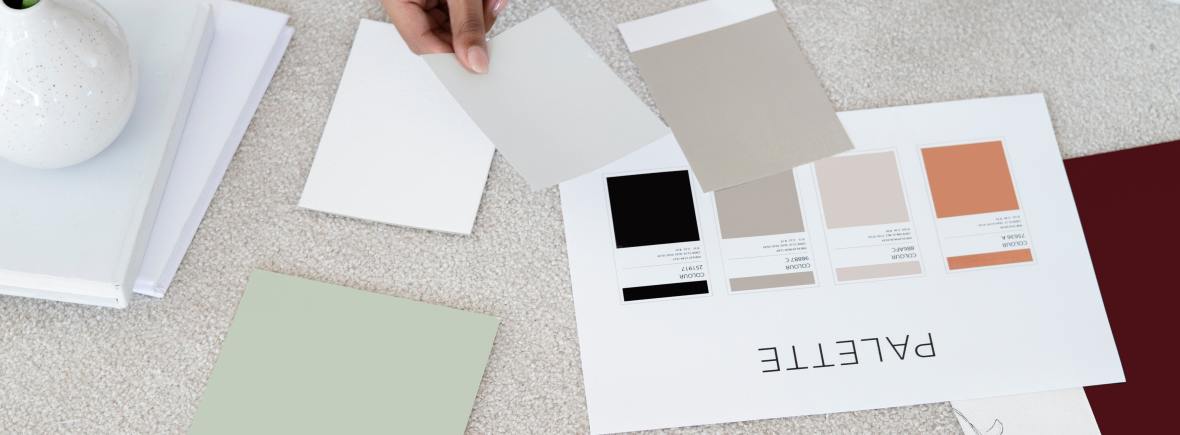
Learn the rules like a pro, so you can break them a like an artist – Pablo Picasso –
We all would like to have a home that we love, full of things and memories we cherish…
But let me tell you something: the two things together don’t always work well!
This is not to say that we cannot keep our good memories or otherwise we will be destined to live in a place we do not like, but the two things must be carefully studied and carefully planned (especially pay attention to that “full“).
There are many design elements (and you will find a list and a brief description below), and they are all critical for achieving a good result in decorating. For all of you who want to approach interior decoration to renovate a space, a room, or even the whole house, it is essential, though, to familiarize yourself with a basic concept: the mood.
The mood is the feeling that a house gives us when we enter. As it happens with people, the mood of our house influences our mood, attitude, and sensations. It is a composite of various elements, such as the right choice of style, materials, and color combination, and must be the starting point of our project to achieve that feeling of well-being that we all would like to have in the place where we live.
A project that starts from a carefully studied mood will be carried out more efficiently and will give us the result we are looking for.
THE MOOD
THE ELEMENTS AND PRINCIPLES OF DESIGN
By combining the elements of design successfully you can achieve a decorating scheme with a particular mood or atmosphere.
ELEMENTS OF DESIGN
LINE – It is the first element of design, basically a flow in space. It can be actual (a pencil mark, a crack in a pavement, etc.) or can be visual (a line created when two shapes meet).
DIRECTION – it gives the viewer a visual path to follow. All lines have a direction that affect the observer. Different directions inspire different feeling: horizontal direction gives a sense of rest and relaxation; vertical direction gives a sense of formality; diagonal direction gives a sense of movement /action.
SHAPE – a line becomes a shape when it entcloses a space. Shapes can be geometric (those that can be drawn be using a ruler, a compass or a digital instrument) or organic (those that can be found in nature or drawn by hand).
SIZE – selfexplanatory… the dimension of an object, a pattern, etc. In design, shapes that are similar in size tend to give a feeling of monotony, while variety in size will add interest.
COLOR – it is created from the breaking up of white light. It is one of the more challenging element of design that can have a significant impact on the look and feel of our room.
TONE – it is also called VALUE and it is the amount of darkness or lightness of a color. Tonal keys can help to set the mood of a room.
TEXTURE – is a visual as well as tactile quality. All surfaces are variations of four basic texture: rough matt, smooth matt, rough glossy, smooth glossy.
 The Charming Tip